Annual Newsletter - Fall 2025

From the Chair's Desk

Dr. Margot Versteeg
Professor and Chairperson
Welcome back. I hope that everybody has enjoyed some well-deserved time off to connect with family and friends. We all need a break away from our daily routines.
But academic summers are long, almost three months, and our colleagues and graduate students have been very active. Many of them traveled, visiting different US states and various continents for research and conferences.
These work trips are often highly inspirational as they help advance our research and facilitate networking and exchanges among peers. They also help us to get new ideas and set new goals for when we are heading back to KU to start the new academic year.
Because whatever happens in the world outside, we continue to do what we do best: with passion and dedication, we open the eyes of our students and provide them with a linguistic and cultural understanding of the Spanish and Portuguese-speaking worlds through research, teaching, and outreach.
Cheers,
Margot
Graduate Degrees Conferred (2024 - 2025)
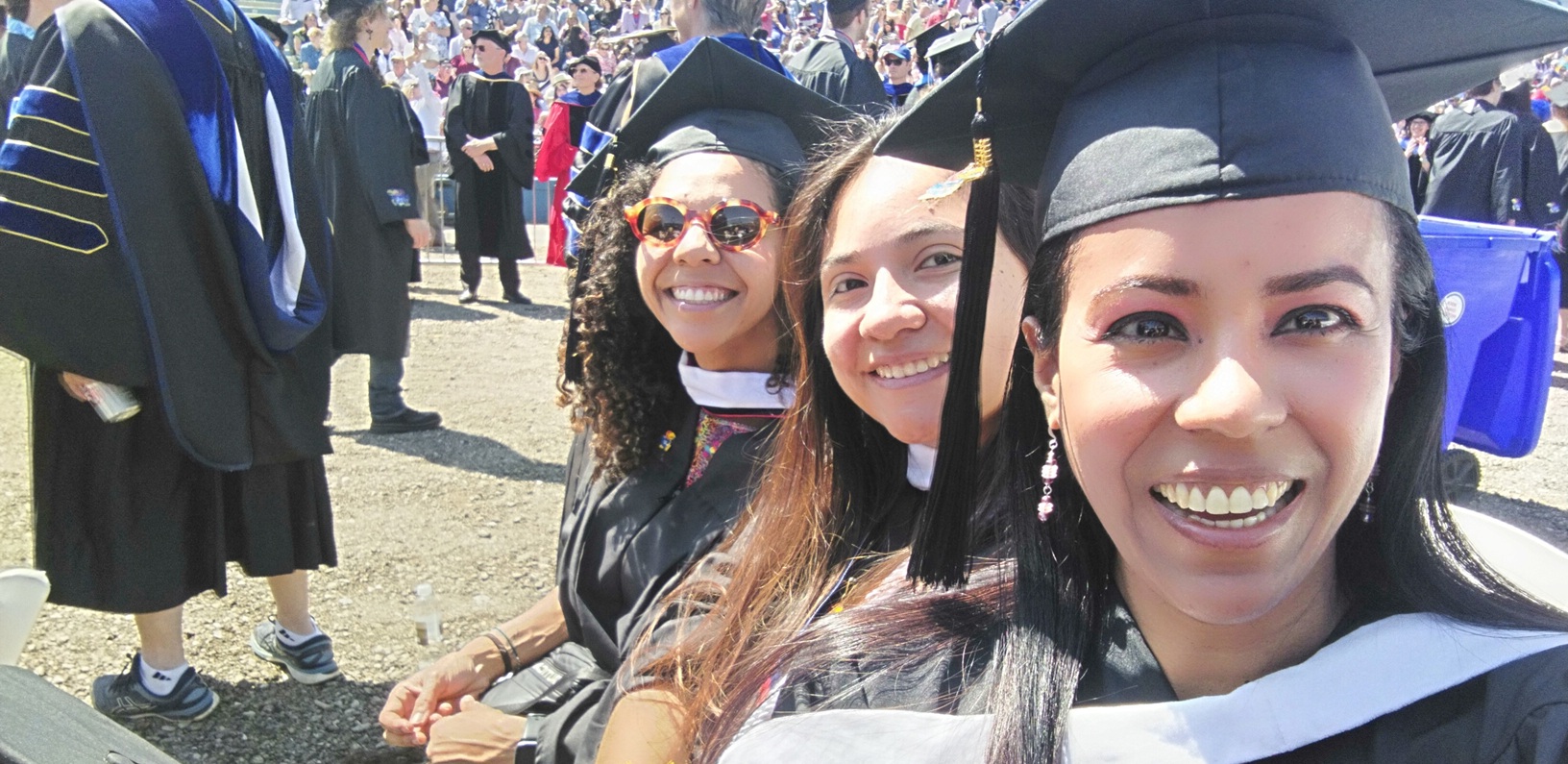
Sofía, Camila, and Laryssa at May 2025's Commencement ceremony
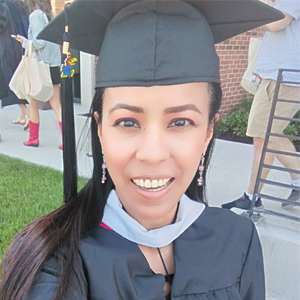
Sofía Castillo
M.A. in Spanish (Spring 2025) — Now pursuing a Ph.D. in Spanish with our department!
Camila Micán Rondón
M.A. in Spanish (Spring 2025)
Laryssa Oliveira Rodrigues
M.A. in Spanish (Spring 2025)
Fall 2025 (as of September):
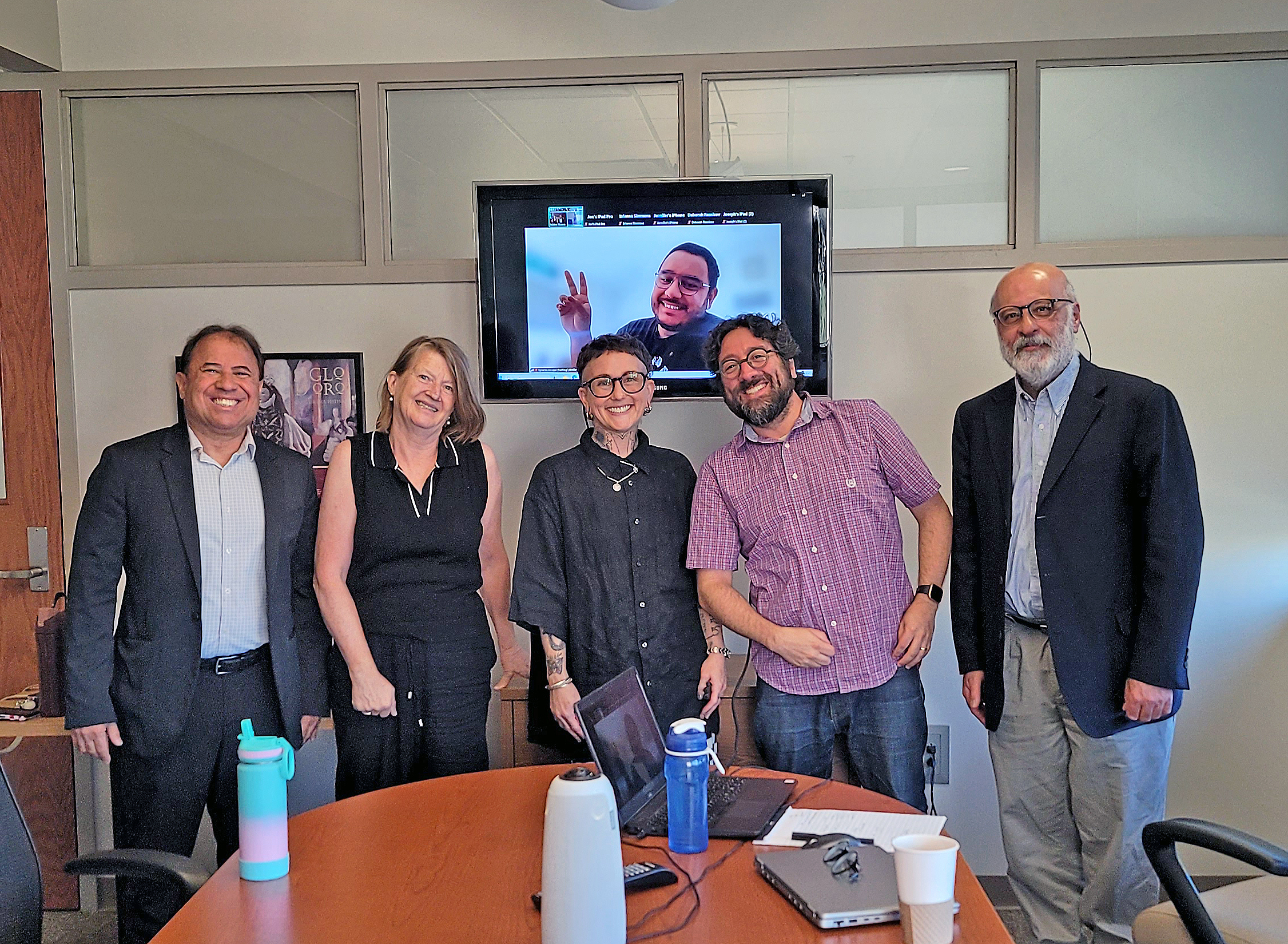
Pictured, left to right: Antonio Luciano Andrade Tosta, Margot Versteeg (chair) Mira Haydu, Ignacio Carvajal Regido (in monitor), Sam Brody, Isidro Rivera
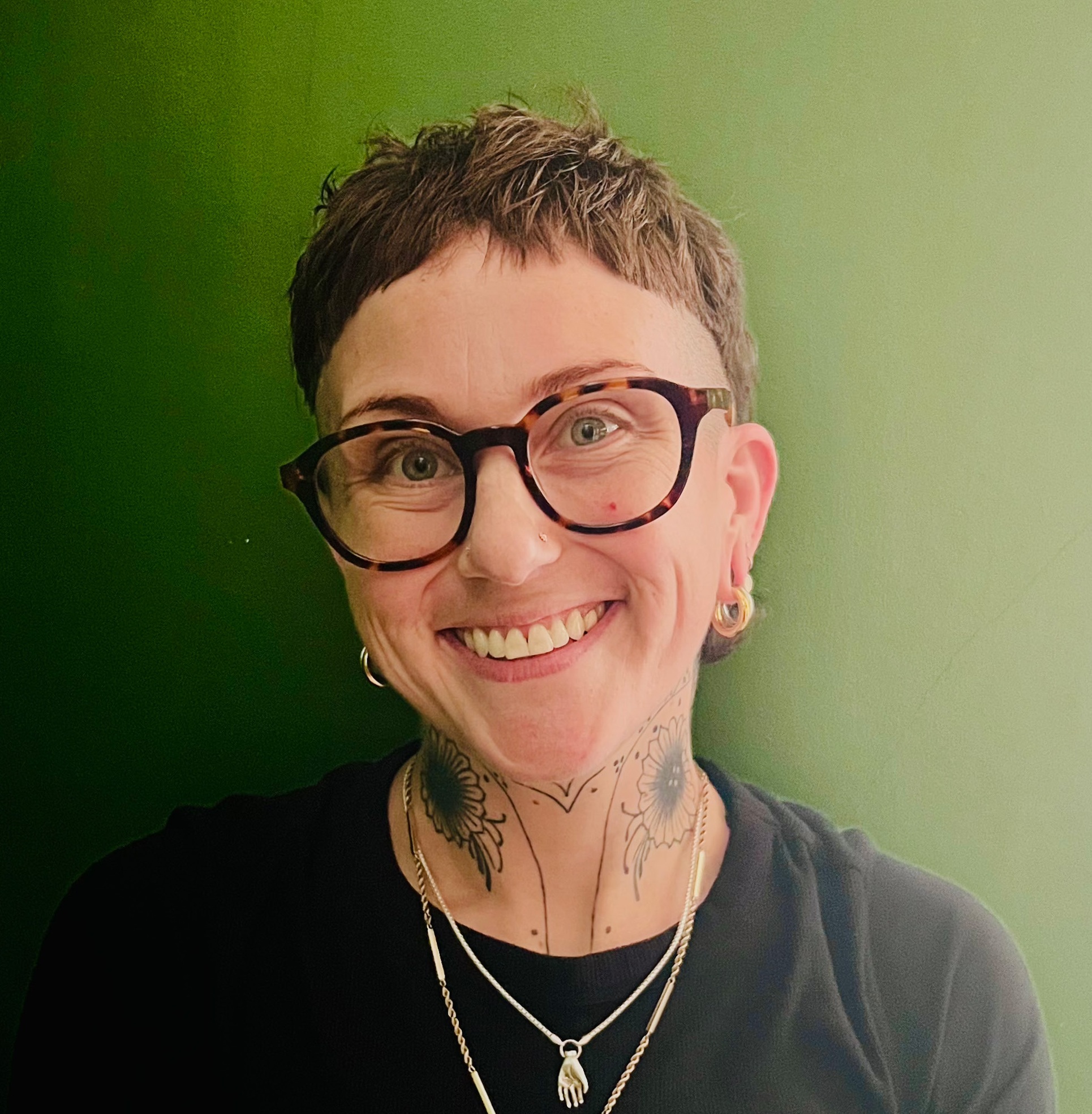
Mira Haydu
Ph.D. in Spanish (Fall 2025)
Dissertation title: "Race, Identity, History: The Literary Recuperation of Latin America’s Colonial Sephardic Legacy"
2025 Kemper Teaching Fellowship Awarded to Prof. Sean Gullickson
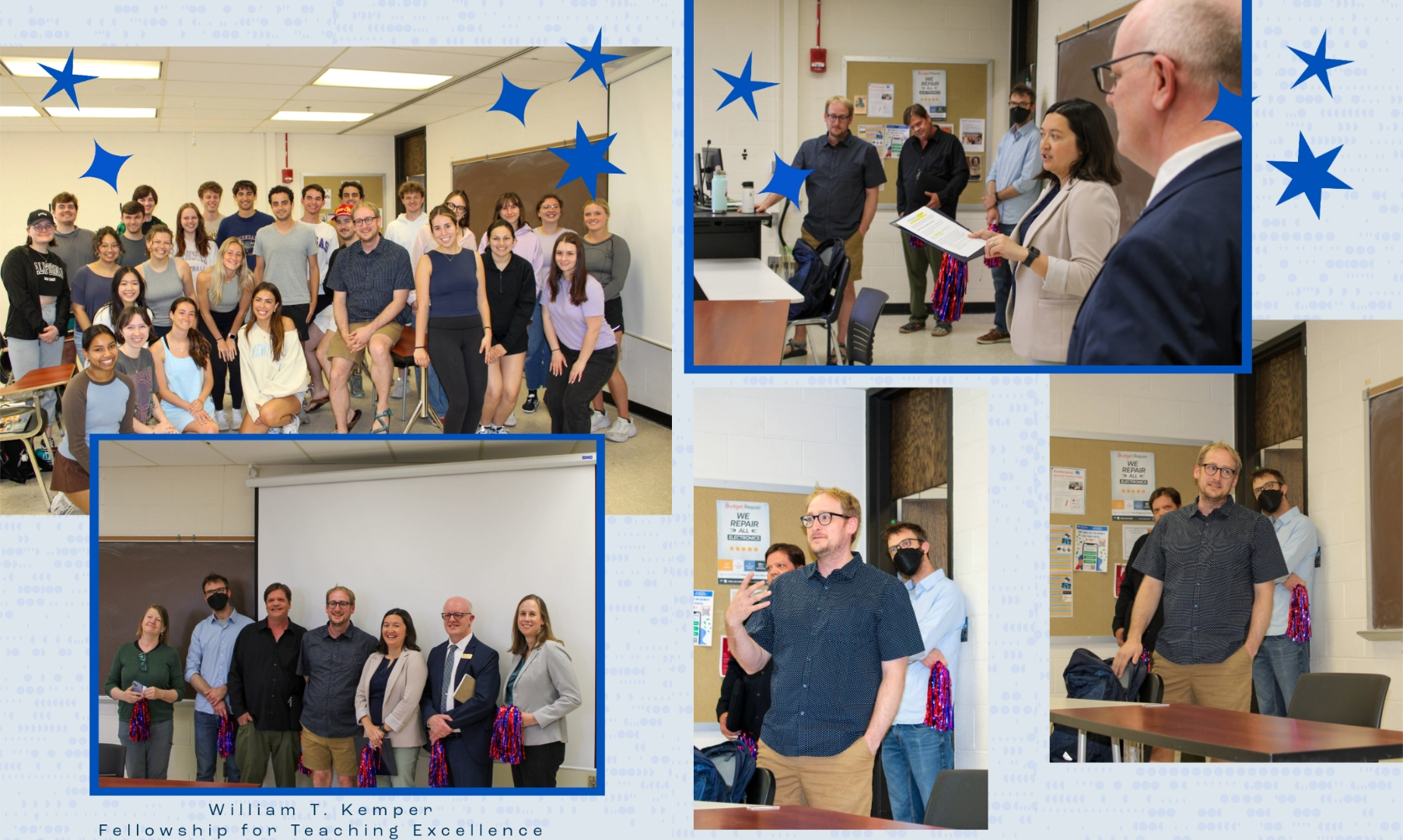
Teaching is central to KU’s mission, and last spring we were thrilled to celebrate Dr. Sean Gullickson as one of the college’s five faculty members honored with the 2025 William T. Kemper Fellowship for Teaching Excellence.
The Kemper Fellowship is one of the University of Kansas’ most prestigious annual awards, recognizing faculty members who exemplify outstanding teaching, innovative pedagogy, and inclusive mentorship. During a surprise class visit from university leadership, the award committee highlighted the wealth of positive student feedback describing how Dr. Gullickson’s teaching has helped them develop critical skills, embrace academic challenges, and achieve long-term success. His student-centered approach to language instruction, clear communication, and engaging classroom atmosphere were central to this recognition.
Dr. Gullickson has been a valued mentor and collaborator both inside and outside the classroom. His contributions extend across the university through leadership in degree-level learning outcomes, service on alternative assessment working groups, and his participation in the Mellon Scholars program connecting language study with the performing arts. He also regularly partners with units such as the Spencer Museum, KU Libraries, and the Lied Center to enrich his students’ learning.
Each Kemper Fellow receives a $7,500 award from the William T. Kemper Foundation. Dr. Gullickson will be honored along with the other fellows at KU’s annual University Teaching Awards celebration on October 21, 2025.
2025 Woodyard Lecture Welcomes Alumna and Keynote Speaker Dr. Paola Hernández
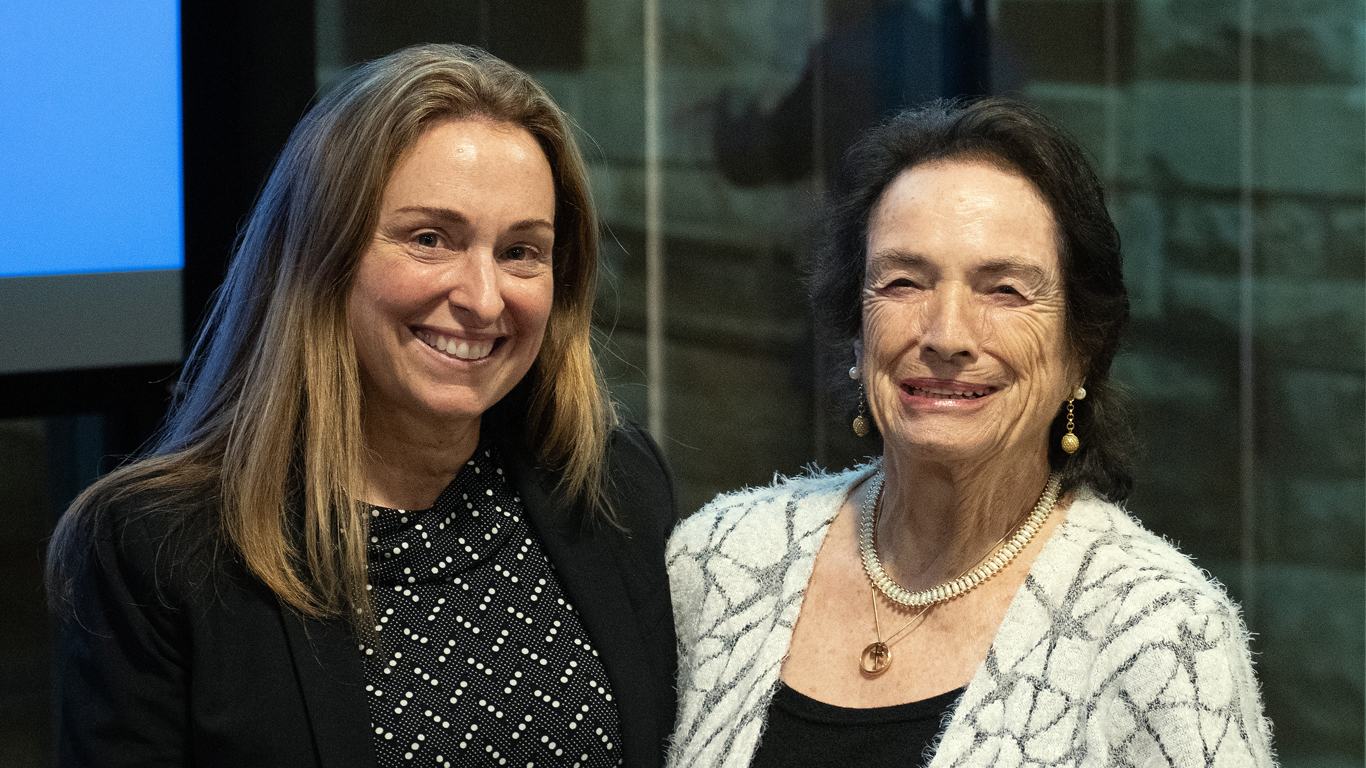
The Department proudly hosted the 2025 Woodyard Lecture last spring, welcoming distinguished scholar Dr. Paola Hernández as the keynote speaker. Currently the Director of Graduate Studies and Mellon-Morgridge Professor of Spanish & Portuguese at the University of Wisconsin–Madison, Dr. Hernández earned her Ph.D. from KU more than two decades ago under the mentorship of Professor George Woodyard himself. Her return to campus brought her academic journey full circle, serving as a meaningful testament to the legacy she helped shape as a KU graduate student and to the lasting impact of the department’s mentorship and academic community.

Dr. Paola Hernández’s lecture, “Performing the Archive in Latin American Theatre,” examined the evolving roles of documentary and archival practices in contemporary Latin American performance. Drawing from her latest research, Dr. Hernández explored how playwrights and theatre collectives across the region have used personal artifacts, legal documents, oral histories, and photographs to bring real-life stories to the stage - often blurring the line between memory and performance. Her talk particularly highlighted how these works center voices impacted by political violence, migration, and historical silence, using theatre as a space to preserve and re-examine the past.
Honoring the Legacy of George W. Woodyard
George Woodyard
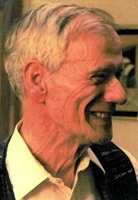
Since 2014, the Woodyard Lecture has brought scholars and artists to campus to engage with the latest developments in Latin American theatre. This series is made possible with funds endowed by the late George Woodyard, Professor of Spanish & the first Dean of International Studies, and his wife, Eleanor.
George W. Woodyard made a lasting impact throughout his nearly four-decade tenure at the University of Kansas. A passionate educator and scholar, Professor Woodyard founded the Latin American Theatre Review in 1967, establishing the first academic journal dedicated to this field. He held several key positions at KU, including Chairman of the Department of Spanish and Portuguese languages (1974-78), Associate Dean of Graduate Studies (1978-89), and the first Dean of International Programs and Studies (1989-96). His leadership extended beyond administrative roles; frequently leading study abroad programs in Mexico and Spain while inspiring countless students through his dedication to cross-cultural education.
The Department of Spanish & Portuguese hopes to uplift Professor Woodyard’s legacy through the annual lecture series and celebrate his enduring contributions to Latin American theater and international education.
Library Insights: Spanish & Portuguese Research at KU
GRASP Hosts 2nd Biennial Graduate Conference
On March 7-8, 2025, the Graduate Association for the Department of Spanish and Portuguese (GRASP) hosted its second biennial conference, “Threads of Knowledge: Interdisciplinary Approaches to Language, Identity, and Resistance”. The hybrid event invited graduate students and scholars from KU and abroad to discuss cultural, political, and educational issues through the lens of language and identity. The conference spanned two days and featured more than a dozen in-person and virtual panels. Topics included Indigenous resistance, bilingual education policy, performance and visual culture, gender and modernism, and the influence of language technologies on power and knowledge.
Day one featured a keynote presentation from Dr. Tiffany Miller, a graduate of our department and now Assistant Professor of Spanish at Colby College. Her talk, “Decolonial Transnational Ch’owen”, explored how Indigenous knowledge systems and cultural expression can inspire cross-border environmental and political activism.
The event was organized by GRASP’s 2024–2025 leadership team: Cesia Espinal, Laryssa Rodrigues, Lorena Mosquera, and Camila Micán. A conference program is available on our website.
Virtual Reality and AI Technologies Transform Spanish Immersion
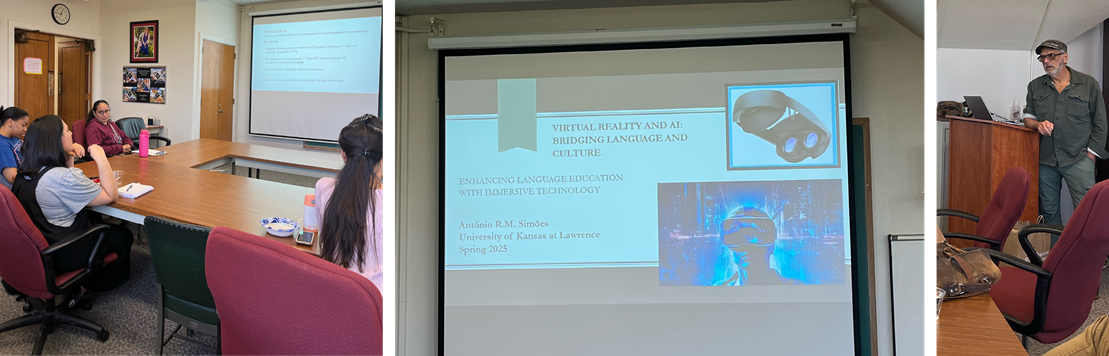
In an era where artificial intelligence and immersive technology are reshaping education, Professor Antônio Simões is helping students discover how these tools can deepen - not shortcut - the language learning experience.
In his Spanish sections such as SPAN 429, “Spanish Phonetics & Phonology,” Professor Simões incorporates a range of AI tools such as ChatGPT, DeepSeek, Mistral Le Chat, and Gemini to support students in building fluency, improving pronunciation, and engaging with complex linguistic concepts. One standout resource is ChatGPT’s Advanced Voice Mode, which functions as an on-demand conversation partner. Thanks to its extensive training on Spanish-language material, the tool can sustain natural dialogue on topics ranging from regional cuisine to contemporary politics. Its ability to shift between different regional accents and dialects makes it particularly engaging for students exploring concepts in phonology, allowing them to hear and compare subtle pronunciation and vocabulary differences in real time. This accessibility helps bridge the gap between classroom learning and immersive practice, something traditionally difficult to achieve without travel or regular access to native speakers.
Of course, AI-generated responses aren’t always perfect, and Professor Simões intentionally designs his assignments with that in mind. Rather than relying on AI as a shortcut, students are asked to compare the tool’s output with traditional readings, classroom instruction, and their own research. This process strengthens their critical thinking and digital literacy by encouraging them to spot inconsistencies, question sources, and engage with emerging technologies through an academic lens. By blending these AI tools with established learning methods, Simões helps students become more discerning language users while reinforcing core skills like reading comprehension, analysis, and source evaluation.
Virtual reality brings a new layer of immersion to the classroom experience. Through a partnership with Meta’s VR for Education program, students use Meta Quest Pro headsets to explore 360-degree environments throughout the Spanish-speaking world. From standing inside the Alhambra to walking the streets of Barcelona or navigating city squares in Madrid, these high-quality video tours offer students a vivid sense of landmark locations and capture cultural details nuances that textbooks can’t fully convey.
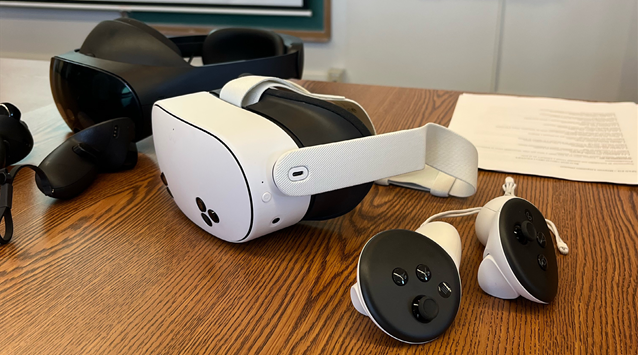
Some of the Meta Quest headsets used in Dr. Simôes's instruction.
Simões presented his work at the KU Center for Latin American & Caribbean Studies’ Merienda Series on April 15, 2025. His talk, “Language Education in the Digital Age,” showcased coursework like reflection reports, podcast-style recordings, and guided AI conversations. Student feedback has been overwhelmingly positive, with many citing gains in confidence, listening skills, and engagement, especially in phonetics and grammar-related activities.
Looking ahead, Professor Simões hopes this initiative will serve as a model for how emerging technologies like AI and VR can be integrated into language courses and augment the foundations of traditional instruction.
Prof. Jonathan Mayhew Talks Lorca in Podcast Appearance
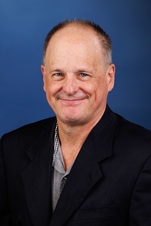
Ever wonder how Federico García Lorca’s plays continue to speak to audiences nearly a century later? Our very own Dr. Jonathan Mayhew joined hosts Sonja and Vanessa on the podcast In Walks a Woman for an insightful discussion on Lorca’s enduring works and the world that shaped them.
The episode explores themes of motherhood, sexuality, and tradition in two of Lorca’s most powerful works: Yerma (1934), which follows a woman struggling with infertility, and The House of Bernarda Alba (1936), a tense family drama written just months before Lorca’s tragic assassination. Dr. Mayhew shares insights into the plays, Lorca’s life, and the political climate of 1930s Spain, helping to highlight why these stories of women navigating societal expectations still resonate in 2025.
An internationally recognized Lorca scholar, Dr. Mayhew is currently at work on two new book projects: Lorca: The Fractured Subject and Musical Lorca. He also incorporates his research into the classroom; in Spring 2025 he taught “SPAN 453: Poets and Singer-songwriters”, where students explored how Lorca, Neruda, and other poets have inspired generations of musicians around the world.
Tune in to the podcast episode here!
Coxinhas, Capoeria, and More at Brazilian Studies Open House
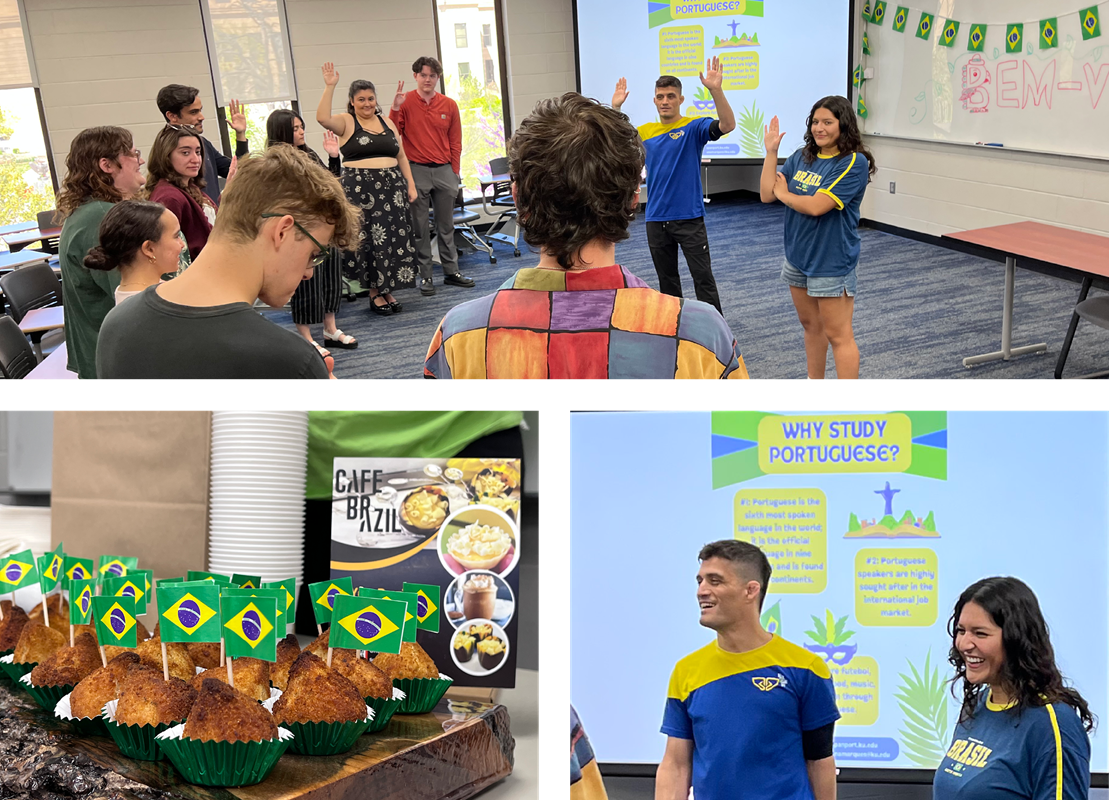
The Department’s Brazilian Studies and Portuguese language programs continue to grow. Last spring, lecturer Ana Laura Marques organized the second annual Open House for our Portuguese and Brazilian Studies program, inviting Jayhawks to learn more about the language and culture. Attendees explored beginner-level Portuguese vocabulary through an interactive practice session, sampled authentic treats like coxinhas and Guaraná soda provided by Café Brazil (Lenexa, KS), and joined in a capoeira demonstration led by instructors from Brazil Academy.
The Open House was just one of the many ways Ana Laura has helped to promote student engagement and expand the reach of Portuguese at KU. The Portuguese Language Practice table has been another popular resource - check out the following page for Fall 2025 meeting information!
Language Practice Tables Return for Fall 2025!
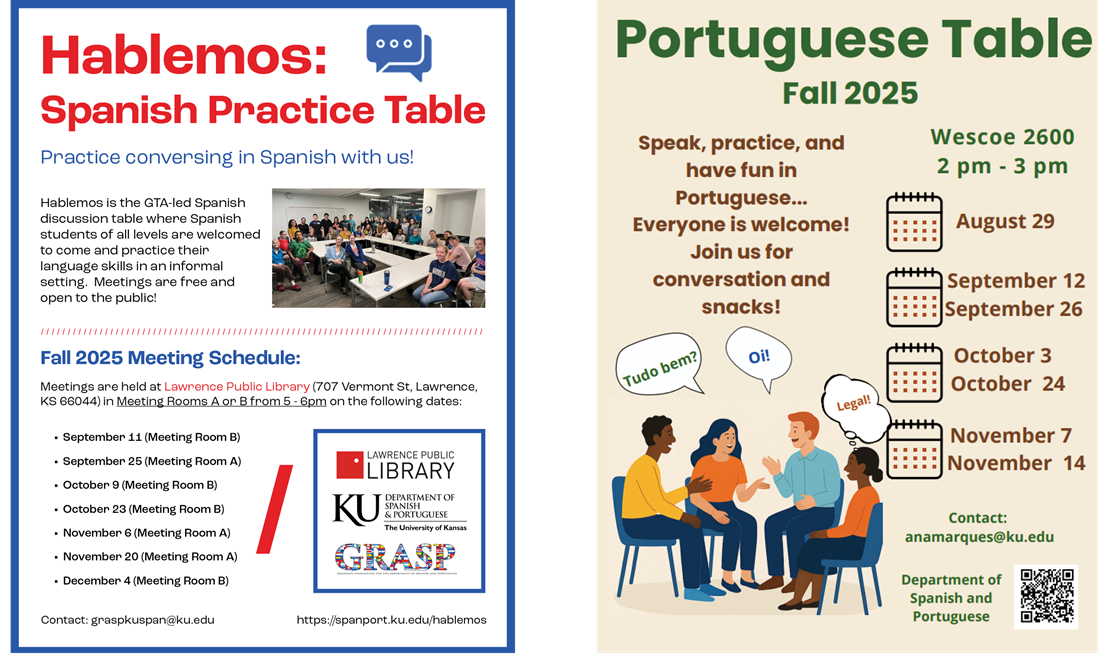
The Department will once again offer its popular Spanish and Portuguese conversation tables this fall! These free gatherings provide students and community members with a welcoming space to practice their language skills in a relaxed and supportive environment.
The Spanish table, Hablemos, is organized by graduate students through the Graduate Association for the Department of Spanish & Portuguese (GRASP). Thanks to the generosity of our donors, graduate facilitators are able to lead sessions that encourage meaningful conversation while introducing new vocabulary and cultural themes.
The Portuguese table is coordinated by lecturer Ana Laura Marques. Similar to Hablemos, the Portuguese table is designed to connect language learning with cultural engagement via focused conversational topics.
Fall 2025 Meeting Times
Meets 5-6pm at Lawrence Public Library (707 Vermont St, Lawrence, KS 66044) on the following dates:
- September 11 (Meeting Room B)
- September 25 (Meeting Room A)
- October 9 (Meeting Room B)
- October 23 (Meeting Room B)
- November 6 (Meeting Room A)
- November 20 (Meeting Room A)
- December 4 (Meeting Room B)
Contact: graspkuspan@ku.edu
Portuguese Practice Table
Meets 2-3pm in Wescoe 2600 on the following dates:
- August 29
- September 12
- September 26
- October 3
- October 24
- November 7
- November 14
Giving to the KU Department of Spanish & Portuguese

The Department of Spanish & Portuguese at the University of Kansas is committed to teaching and research related to the Spanish and Portuguese speaking world. Guided by a vibrant community of scholars, the Department aspires to expand its national and international outreach, to educate new generations of scholar-educators, and to instill in our graduates an understanding of the increasingly complex multicultural society in which we live.
Your generosity helps sustain this mission. Gifts to the department make a direct impact on our students, creating opportunities for them to conduct original research, engage with scholars at conferences, and broaden their horizons through study abroad.
On behalf of our faculty and students, thank you for your generous support as we continue our commitment to our extended community, a community of which you are an integral part.